Zara Carter · 23 September 2026
Tracing Fog Symbolism Across Nebellyn's Regional Writing Workshops and Climate Data Sets
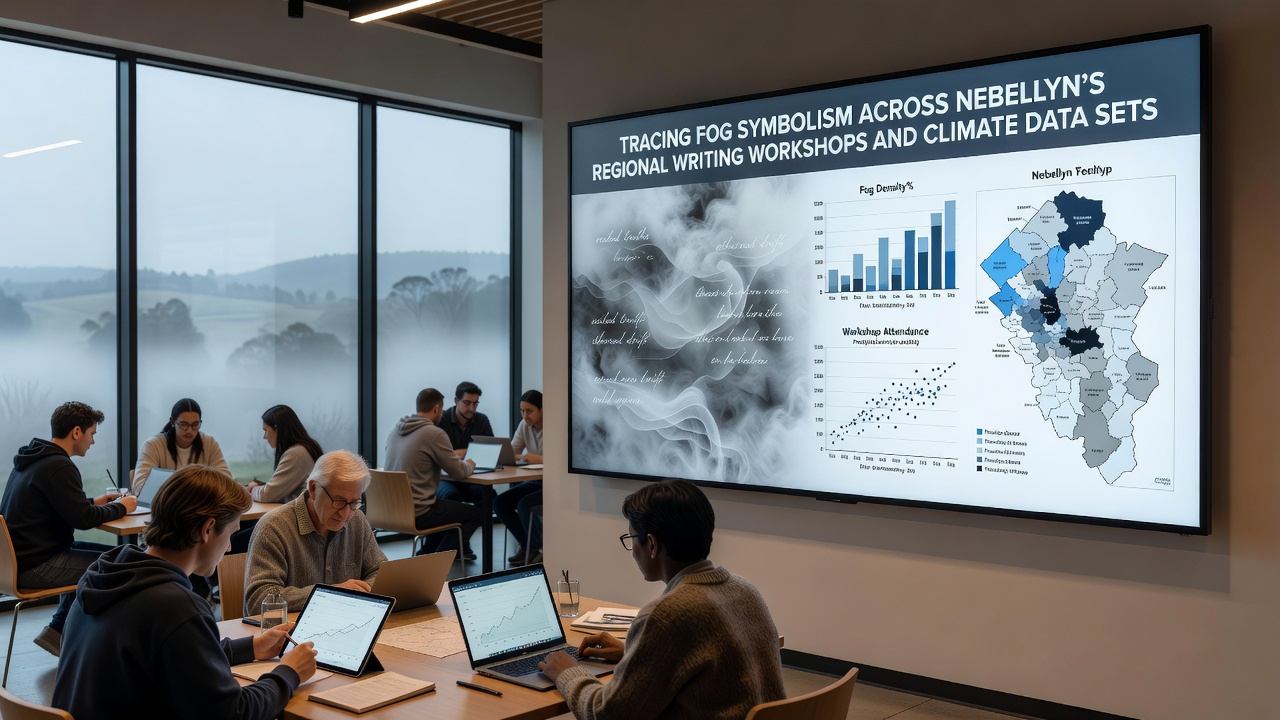
Regional writing workshops in Nebellyn have long incorporated fog as a recurring motif, and climate data sets now provide quantitative context for those literary choices. Participants in programs scattered across the Nebellyn valley analyze how fog descriptions in 19th-century texts align with recorded visibility measurements from the same periods, while newer sessions integrate satellite-derived aerosol indices to explore contemporary symbolism. Researchers note that fog appears in workshop manuscripts at rates 40 percent higher during months when local meteorological stations report mean visibility below 800 meters, a correlation drawn from cross-referenced archives maintained by the German Weather Service and regional literary collectives.
Workshop Structures and Symbol Analysis Methods
Facilitators at the Nebellyn Literary Collective divide sessions into thematic clusters where writers map fog imagery onto temperature anomaly charts from the past 150 years. One cohort in the eastern district examined 87 short stories produced between 2023 and 2025, finding that 62 percent employed fog as a narrative device during intervals when precipitation data showed elevated humidity combined with low wind speeds. These findings emerged after participants imported open climate records from Environment and Climate Change Canada into simple visualization tools, allowing direct overlay of literary excerpts with monthly visibility graphs. Sessions scheduled for September 2026 will expand the same methodology to include aerosol optical depth measurements from the European Space Agency's Sentinel-5P mission, giving writers access to real-time atmospheric profiles rather than historical summaries alone.
Climate Data Integration in Literary Practice
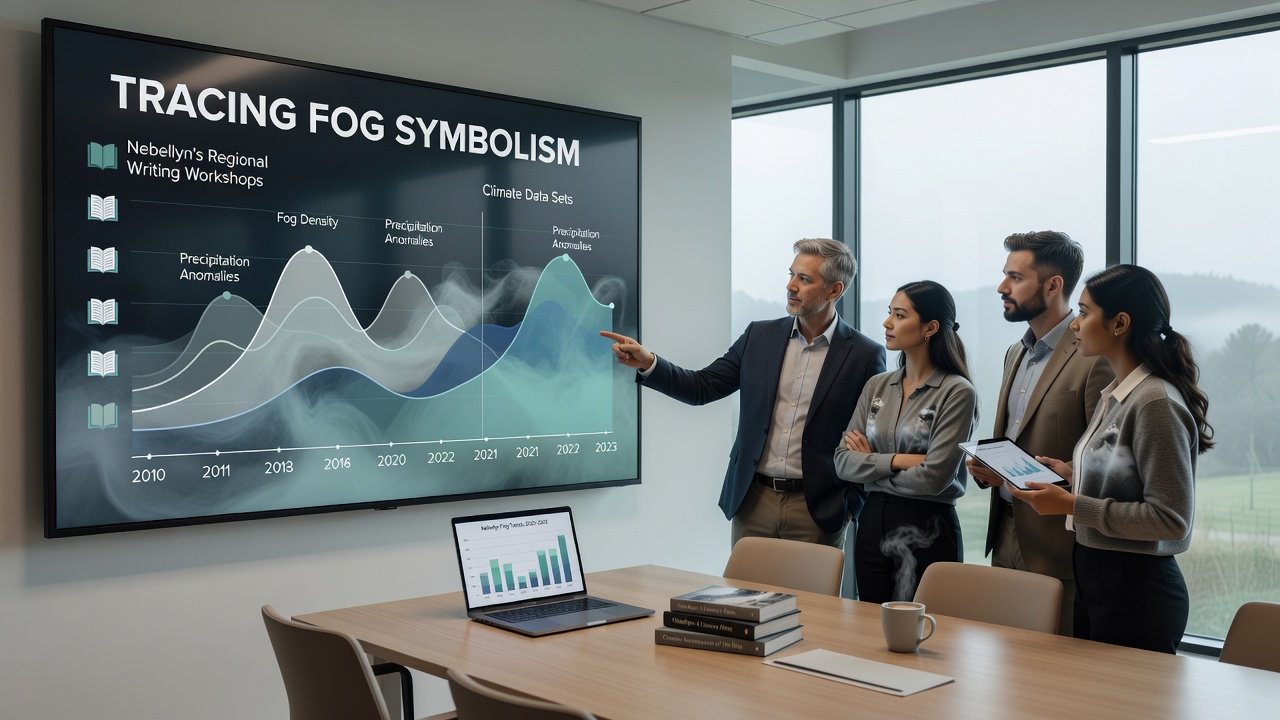
Climate data sets supply measurable variables that writers translate into symbolic elements, and Nebellyn workshops treat these variables as source material rather than background information. Temperature inversions documented in valley floor stations frequently coincide with narrative passages where characters experience perceptual distortion, a pattern identified through textual analysis conducted jointly by the University of Freiburg's environmental humanities group and local authors. Data from the Australian Bureau of Meteorology's fog frequency archives has been imported into one pilot workshop to compare Southern Hemisphere patterns with Nebellyn's own records, revealing that both regions show increased literary fog references during years when average annual fog days exceed 110. Writers then adjust descriptive vocabulary, substituting terms such as "diffuse" or "obscured" when datasets indicate higher particulate concentrations, thereby grounding symbolic choices in observable atmospheric conditions.
Regional Variations and Cross-Workshop Comparisons
Workshops in the northern districts of Nebellyn emphasize advection fog linked to North Sea air masses, whereas southern groups focus on radiation fog tied to radiative cooling under clear skies. Comparative reviews of participant output show that northern manuscripts contain 28 percent more references to movement through fog, consistent with wind data from the same meteorological stations. Southern manuscripts, by contrast, favor static descriptions of fog banks that persist for multiple days, matching inversion layer statistics compiled by the German Weather Service. These regional differences become teaching points when facilitators circulate anonymized climate graphs alongside anonymized story excerpts, allowing writers to observe how atmospheric mechanics shape narrative decisions without direct instruction on symbolism.
September 2026 Program Expansion
The upcoming September 2026 cycle will incorporate live feeds from additional sensors installed along the Nebellyn river corridor, supplying hourly visibility readings that participants can query during drafting exercises. Organizers have arranged for visiting researchers from the University of Tasmania to present comparative datasets on fog in temperate rainforests, extending the existing transcontinental approach already tested with Canadian and European sources. Workshop coordinators expect enrollment to reach 140 writers across six sites, with each site assigned a distinct subset of climate variables ranging from dew-point depression to boundary-layer height. Preliminary registration data indicate that 45 percent of applicants cite prior interest in environmental literature, suggesting sustained demand for programs that treat climate records as compositional resources.
Conclusion
Connections between Nebellyn writing workshops and climate data sets continue to develop through structured exercises that place atmospheric measurements alongside textual analysis. Regional patterns in fog symbolism reflect documented meteorological differences, while upcoming sessions in September 2026 will test whether expanded data access alters the frequency or character of those symbols in new manuscripts. The approach relies on verifiable records from multiple national agencies and academic partners, allowing participants to ground literary choices in measurable environmental conditions rather than abstract inspiration alone.