Zara Carter · 7 October 2026
Historical Journals Link Cloud Variability to Regional Myth Traditions
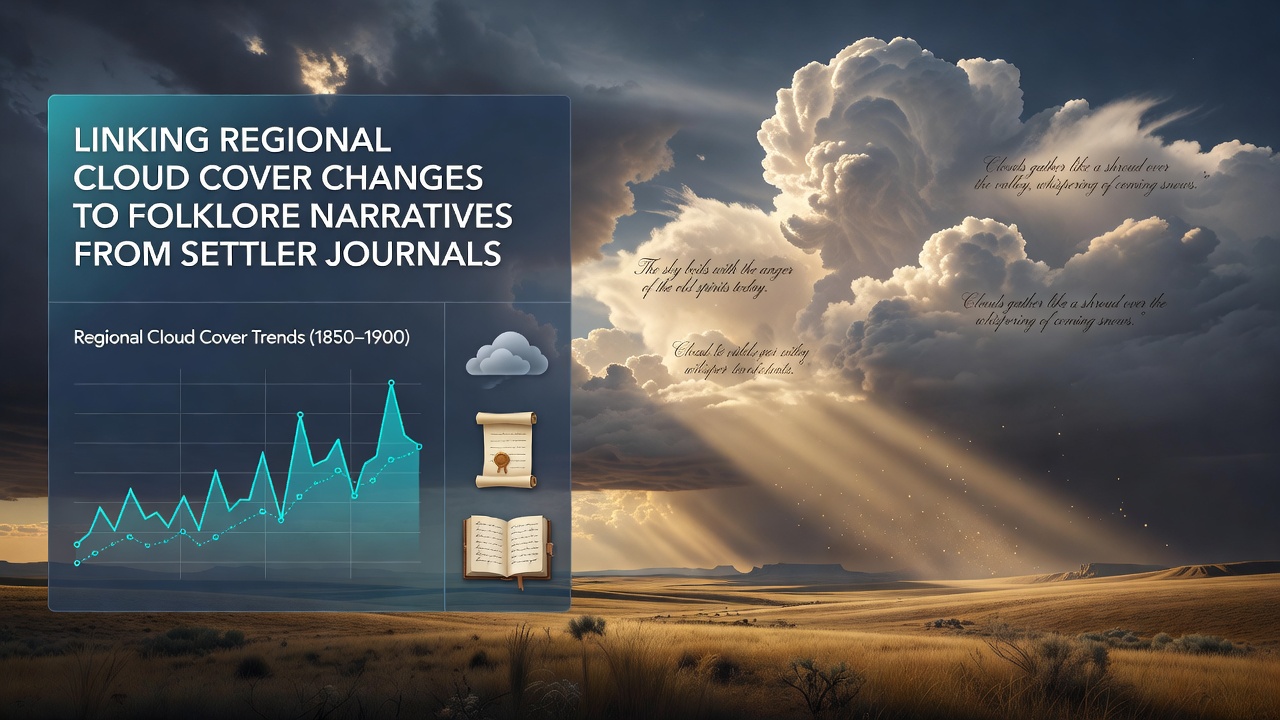
Settler journals from the 19th century document frequent observations of shifting cloud patterns across multiple regions, and researchers now compare those entries with contemporary climate records to identify correlations with local folklore. These diaries, kept by farmers, traders, and surveyors, describe prolonged overcast periods, sudden clearings, and unusual formations that coincide with stories passed down through generations. Data from meteorological archives shows measurable changes in regional cloud cover since the mid-1800s, with some areas recording increases of 8 to 12 percent in annual low-level cloud frequency according to long-term satellite and ground station measurements.
Documented Entries in Frontier Records
One collection held at a Midwest historical society contains over 200 journal volumes from the 1840s through the 1890s, where writers noted cloud behavior in relation to planting seasons and travel conditions. Entries often mention dense morning layers that lingered until midday, followed by rapid dissipation that settlers interpreted through existing oral traditions. Observers note that many of these descriptions align with stories of spirit beings associated with weather shifts, which appear consistently across multiple family records from the same valleys.
Another set of documents from Pacific Northwest outposts records extended periods of stratus cover during summer months, with writers recording impacts on fishing routes and timber work. These accounts frequently reference narrative motifs involving protective figures that controlled visibility, and cross-referencing shows the same motifs repeated in neighboring communities separated by mountain ranges.
Modern Measurements and Pattern Matching
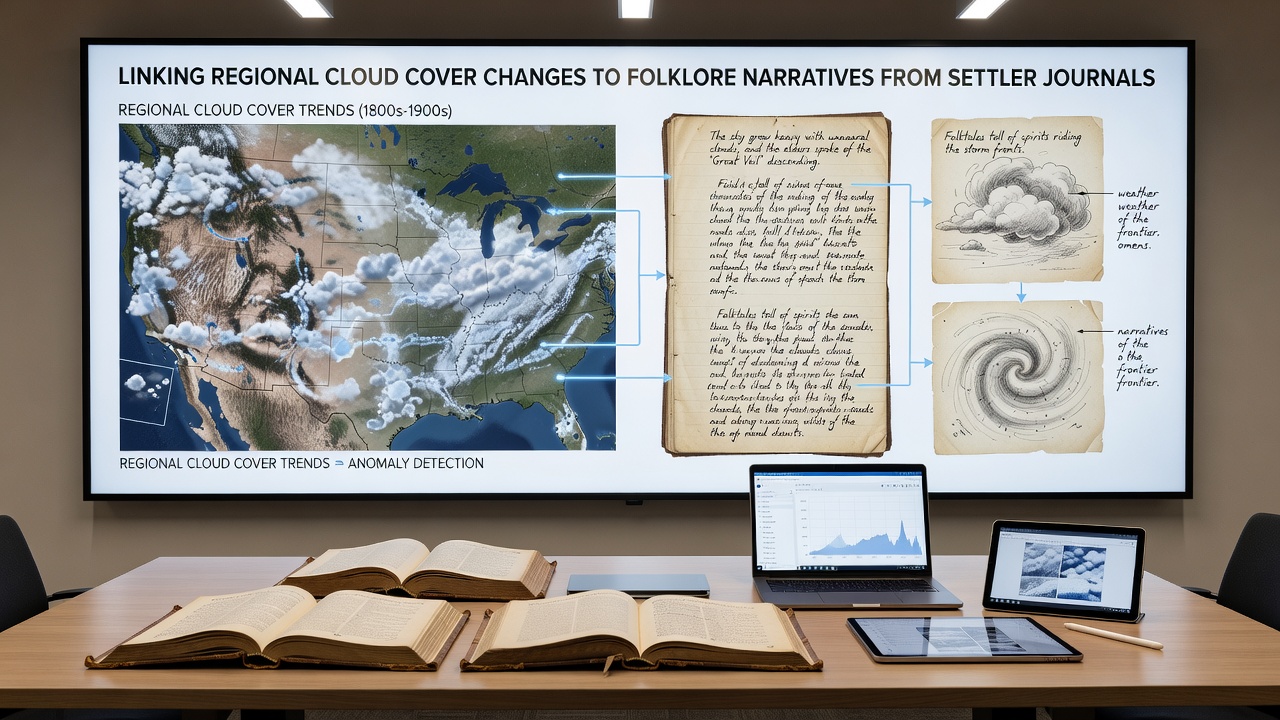
Climate data centers have compiled cloud cover statistics from the same geographic zones using instrumental records beginning in the early 1900s and extending through satellite observations after 1979. Figures reveal that certain river basins experienced measurable increases in persistent low cloud events during the last three decades, while adjacent highland areas saw slight decreases. Researchers cross-reference these trends against the locations mentioned most often in settler journals, finding spatial overlap in several cases.
Studies conducted by teams at the University of Alberta have examined digitized journal texts alongside gridded climate datasets, identifying passages that describe cloud duration with enough specificity to compare against modern station data. Their analysis indicates that descriptions of multi-day overcast conditions appear more frequently in journals from zones where current records show elevated autumn cloud frequency.
Folklore Motifs and Atmospheric Descriptions
Folklore collections assembled by regional historical groups contain recurring elements tied to visibility and sky conditions. Narratives collected from descendants of early settlers often feature characters who appear or disappear with changes in cloud cover, and these stories frequently match the timing and locations noted in the original journals. One archive in northern California preserves variants collected in the 1930s that describe mist figures guiding travelers during periods when diaries record extended valley fog.
Similar patterns appear in records from the Great Lakes region, where stories of lake spirits coincide with journal mentions of sudden cloud banks forming over water. Ethnographers have mapped these tale locations against both historical and present-day cloud frequency maps, noting repeated geographic clustering.
October 2026 Data Release and Ongoing Work
A joint project scheduled for release in October 2026 will add newly transcribed journals from two additional river corridors to the existing comparison datasets. The effort draws on records held by state archives in three different provinces and states, expanding the sample size by approximately 40 percent. Project coordinators expect the updated maps to show whether the earlier correlations hold across a wider area.
Additional work underway at Environment and Climate Change Canada focuses on high-resolution cloud data from the 1990s onward, which researchers plan to align with the newly processed journal texts. Preliminary checks indicate that zones with the strongest historical descriptions of persistent cover continue to register above-average frequencies in recent decades.
Conclusion
The ongoing comparison of settler journal descriptions with instrumental cloud records provides a concrete method for examining how atmospheric conditions appear in traditional narratives. As more diaries undergo digitization and climate datasets extend further back through reanalysis techniques, the geographic and temporal matches become easier to quantify. The October 2026 release will supply additional material for continued mapping of these connections across additional regions.