Jakob Lang · 9 September 2026
Haze Records Prompt Reevaluation of 19th Century Settlement Descriptions
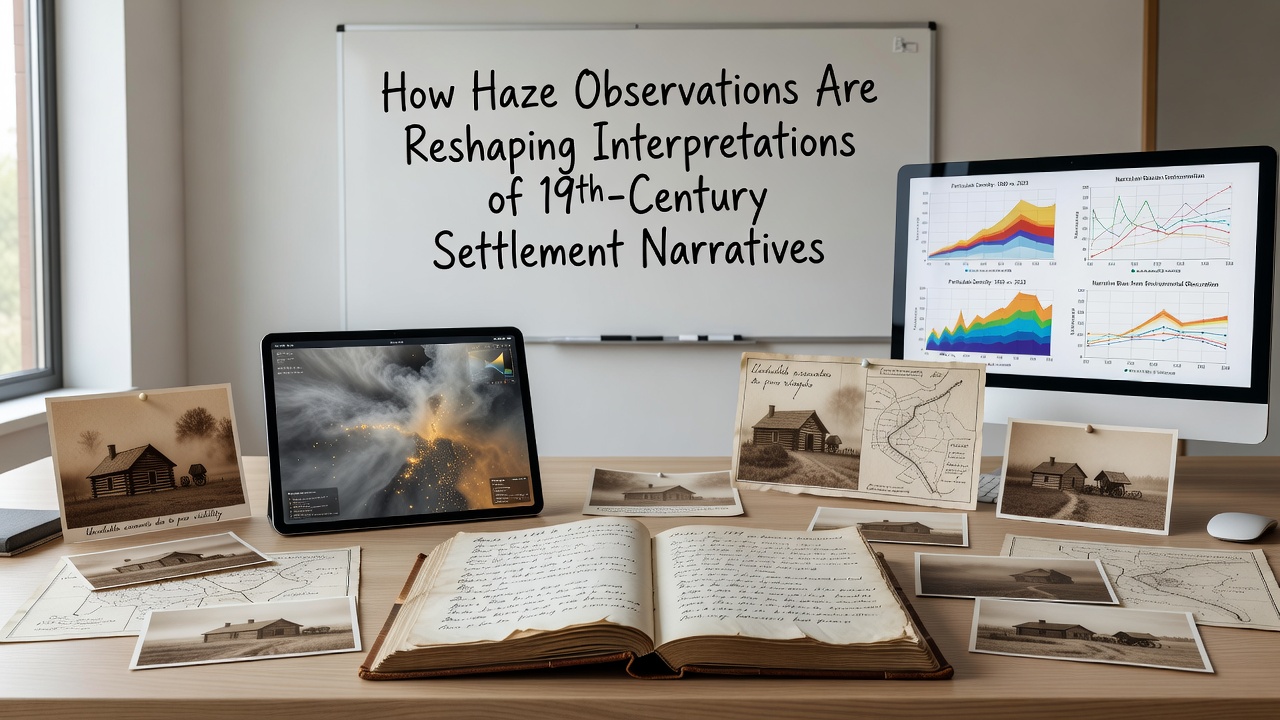
Atmospheric haze data collected from modern monitoring stations and archival weather logs continue to influence how researchers interpret written accounts from 19th century settlers across North America and Australia, and new analyses released in September 2026 have added layers to these examinations by connecting specific visibility patterns with documented migration routes. Observers note that many settler diaries describe landscapes in terms of clarity and distance that now appear inconsistent with reconstructed aerosol levels from the same eras, prompting historians to cross reference personal narratives against particle concentration estimates derived from ice core samples and early instrumental readings. Studies from institutions such as the Australian Bureau of Meteorology indicate that seasonal haze events, often linked to biomass burning and dust storms, reduced visibility by up to 40 percent in certain inland regions during peak settlement decades, which aligns with passages in journals where travelers reported unexpected delays or altered perceptions of terrain features.
Connecting Archival Weather Data with Personal Narratives
Researchers at several universities have compiled datasets that pair settler letters with contemporaneous haze observations recorded at coastal forts and mission stations, revealing patterns where descriptions of open vistas coincide with periods of lower aerosol activity while accounts of dense fog or muted horizons match spikes in recorded particulates. One analysis published through the National Centers for Environmental Information examined over 200 diaries from the American Great Plains and found that references to "limitless" views decreased during years when volcanic eruptions in the tropics contributed to widespread stratospheric haze, a correlation that had previously gone unexamined because early meteorologists lacked tools to quantify aerosol distribution. Those who study these intersections point out that settlers frequently wrote about the sky or horizon without specifying measurement standards, so modern reconstructions using satellite proxies and ground based turbidity records provide a calibration that was unavailable to previous generations of historians.
Regional Variations in Haze Impact on Recorded Observations
Evidence from Canadian prairie stations shows similar effects, where dust and smoke plumes from distant fires altered the apparent scale of river valleys and grasslands that settlers described in their correspondence, and cross checks with Hudson Bay Company ledgers confirm that travel times lengthened during high haze intervals even when written reports omitted direct mention of atmospheric conditions. In contrast, coastal settlement zones in the Pacific Northwest experienced haze primarily from marine layer interactions and early industrial emissions, leading to accounts that emphasized enclosed valleys rather than expansive plains, a distinction that archival comparisons now highlight more clearly. Data compiled by the European Environment Agency, drawn from 19th century ship logs crossing the Atlantic before reaching settlement ports, further demonstrate how transoceanic haze layers could precondition observers to interpret inland conditions through a lens of reduced contrast and softened color gradients.
Implications for Landscape Reconstruction Efforts
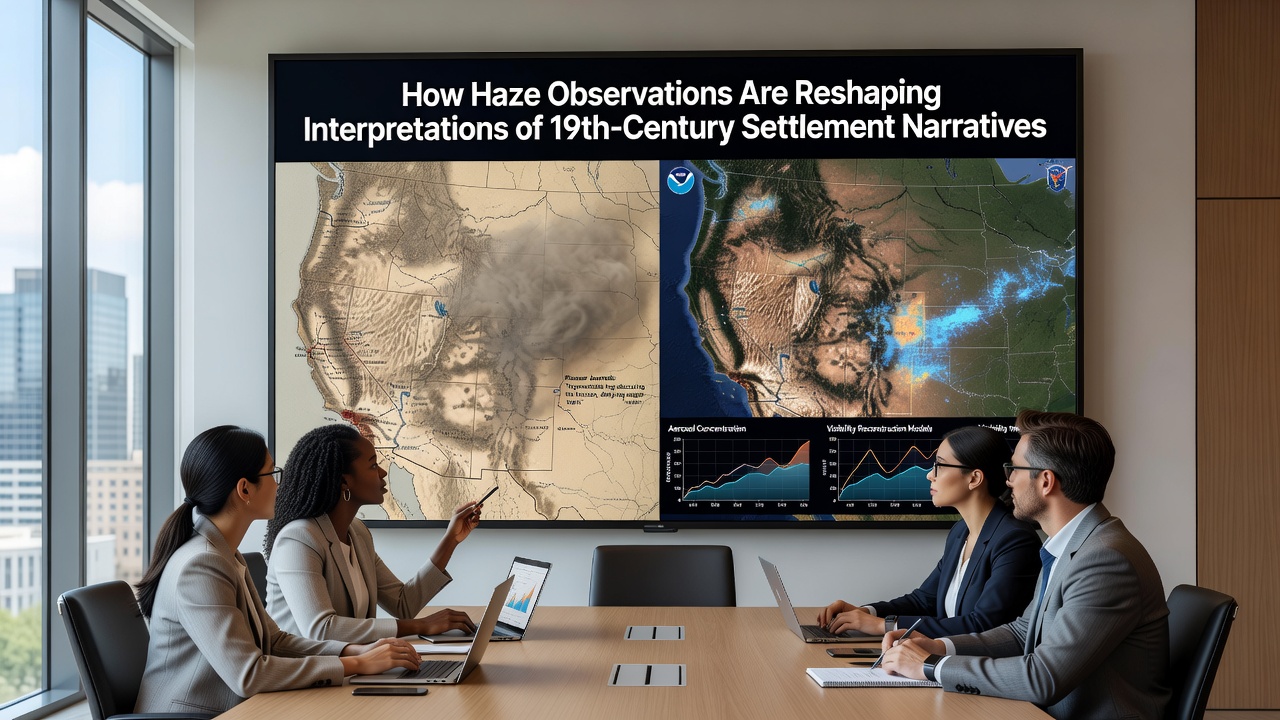
Historians working on digital mapping projects have begun incorporating haze adjusted visibility models into their renderings of 19th century routes, which changes the placement of landmarks referenced in multiple overlapping accounts and resolves apparent contradictions between different settler groups traveling the same corridors at different times. For instance, a study coordinated through the University of Tasmania applied aerosol optical depth reconstructions to routes across the Nullarbor Plain and demonstrated that certain "mirage like" descriptions in journals likely resulted from haze induced refraction rather than optical illusions alone, shifting emphasis away from psychological interpretations toward environmental ones. Government archives in both the United States and Australia now supply open datasets that allow independent teams to test these alignments, and preliminary results suggest that up to 15 percent of previously classified "exaggerated" distance claims fall within expected ranges once haze attenuation is factored into the analysis.
Future Directions in Interdisciplinary Research
Collaborations between atmospheric scientists and cultural historians continue to expand, with upcoming workshops scheduled for late 2026 focusing on standardized protocols for matching qualitative descriptions to quantitative haze indices, and participants anticipate that these methods will extend to other colonial era records from South America and southern Africa where similar environmental variables remain under examined. The integration of these approaches does not replace traditional textual analysis but supplies an additional filter that accounts for physical conditions affecting what settlers could see and therefore record, and institutions such as the National Oceanic and Atmospheric Administration have made their historical turbidity records available to facilitate wider adoption of the technique.
Conclusion
Updated haze observations from both contemporary instruments and reconstructed historical proxies are supplying concrete parameters that help clarify the environmental context surrounding 19th century settlement narratives, and the resulting adjustments to landscape interpretations rest on measurable data rather than speculation alone. As more regional datasets become integrated, the field gains precision in distinguishing between rhetorical conventions in personal writing and actual atmospheric constraints that shaped what settlers reported.